The Tutankhamun Golden Mask: Unresolved Questions About Its Origins and True Owner
The Tutankhamun golden mask is one of the most studied objects from ancient Egypt, but researchers still aren’t sure whether it was originally made for the pharaoh whose face it bears. This page covers the physical evidence they’ve examined, including findings from X-ray analysis, and explains what that evidence does and doesn’t confirm. By the end, you’ll have a clearer picture of the debate and be able to weigh the competing interpretations yourself.
Materials, Construction, and What Analysis Has Confirmed
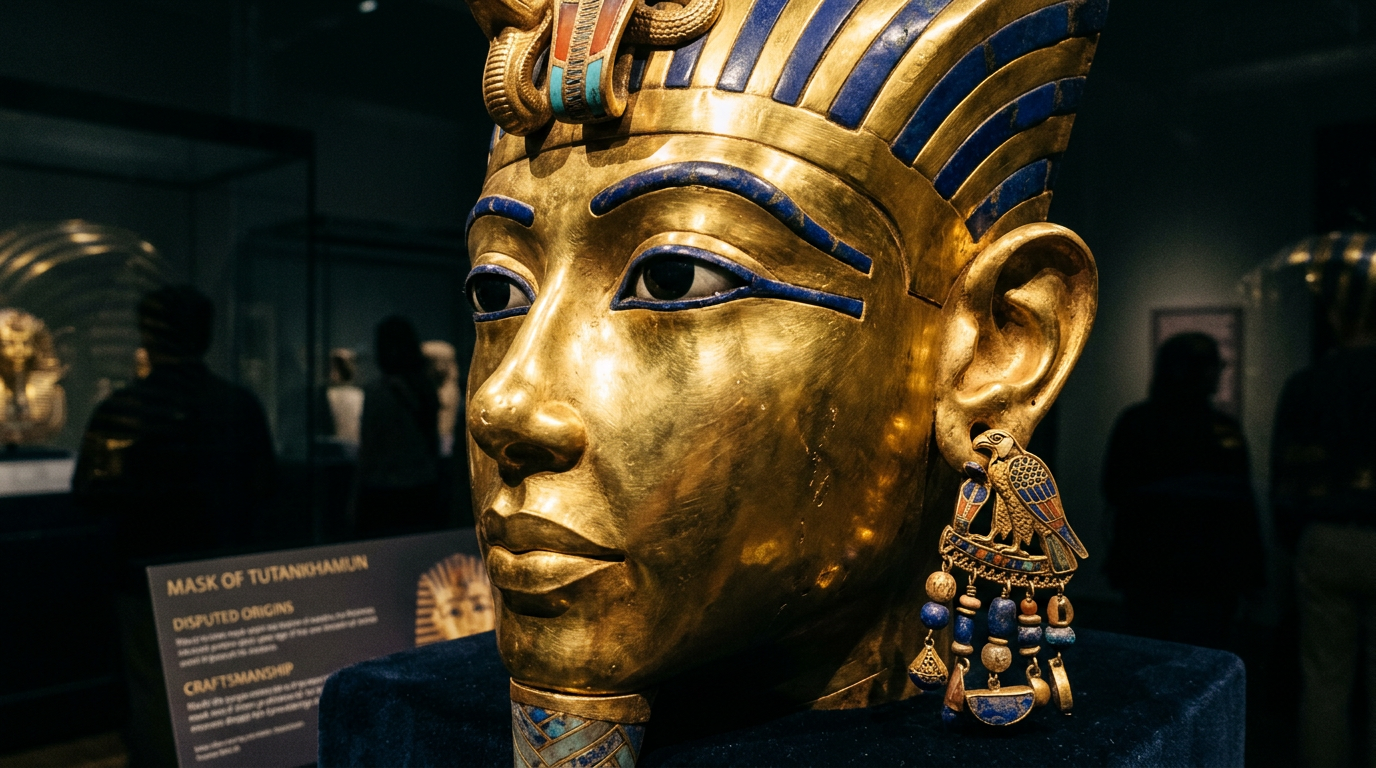
The mask is made from solid gold. The face and nemes headdress are formed from high-karat sheet gold and inlaid with lapis lazuli, carnelian, quartz, obsidian, and turquoise. It weighs about 10.23 kilograms (22.5 pounds). Despite looking like one seamless object, X-ray and physical analysis showed it was assembled from multiple separately worked pieces of gold, not cast as a single unit. That points to a more complex manufacturing process than the finished surface suggests, and tells us something about how royal workshops in the 18th Dynasty were organized.
The mask’s facial features and inscriptions name Tutankhamun, and it was found directly over the king’s mummy, so there’s no ambiguity about where it came from. What complicates things is a specific physical detail: the mask has large, deliberately pierced earring holes. These aren’t accidental damage. In ancient Egyptian royal portraiture, pierced earlobes were associated with female figures, not adult male royals. That’s what led researchers to ask whether the mask had been made for someone else.
The Hypothesis That the Mask Was Originally Made for a Female Royal
The earring holes are the main physical reason some researchers think the mask was originally commissioned for a female royal, most often proposed to be Nefertiti or another queen from the Amarna period. The logic is straightforward: if the holes were part of the original design, and that design convention belongs to female royal portraiture, then the mask may have been adapted for Tutankhamun rather than made for him. For a deeper look at the physical evidence and competing interpretations surrounding this question, see this detailed examination of the Tutankhamun golden mask’s origins and ownership debate.
That said, this hasn’t been confirmed. The earring holes and multi-piece construction are observable facts. The conclusion that the mask was made for a specific female royal is an inference drawn from those facts, not an established finding. X-ray analysis answered questions about how the mask was built, but left the question of original intent completely open. No analysis has definitively identified who the mask was first commissioned for.
It’s also worth paying attention to where this debate shows up in the literature. Museum and encyclopedia sources generally describe the mask as Tutankhamun’s funerary artifact and stick to confirmed facts about its materials and findspot. The identity debate and contested interpretations appear mainly in scholarly and news sources. That distinction matters when you’re trying to judge how strong any particular claim really is.
Why the Question of Original Ownership Has Ritual Significance
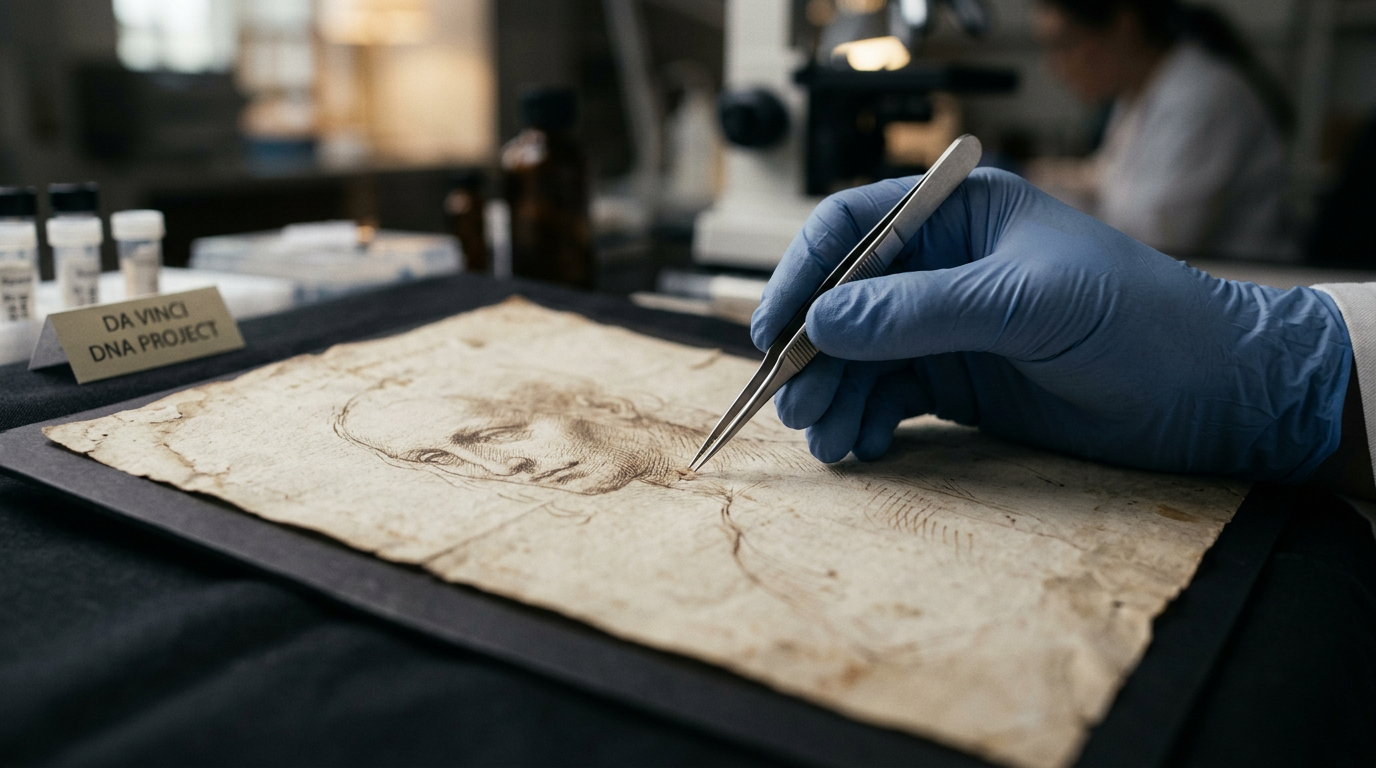
In ancient Egyptian funerary practice, a death mask preserved the identity of the deceased and helped them be recognized in the afterlife. That function makes the question of the mask’s intended recipient more than a historical footnote. If the mask was originally commissioned for a female royal and later adapted for Tutankhamun, that repurposing would be a meaningful departure from the object’s original purpose. It wouldn’t just be recycling materials. It would mean reassigning an object designed to carry a specific person’s identity into the afterlife. This kind of question — where physical evidence points toward a conclusion but stops short of confirming it — also comes up in other historical investigations, such as the ongoing Leonardo da Vinci DNA project, which uses genetic analysis to resolve questions of identity and attribution.
The mask is currently held at the Egyptian Museum in Cairo, where it has been on display since shortly after its discovery in 1922.
What the Evidence Confirms and What Remains Open
The earring holes make the strongest case. Their design convention links directly to female royal portraiture, something adult male images of the period simply didn’t feature. That physical detail, combined with the mask’s multi-piece construction, keeps the original-owner question genuinely open. No source has definitively resolved it, and that uncertainty is the honest takeaway. If you want to dig further into the archaeology behind royal burial objects, the Egyptian Museum’s own documentation is a good place to start.