On Grand Strategy: How Leaders Align Long-Term Goals with Limited Resources
Grand strategy is about matching a state’s military, economic, and political resources to its long-term goals under real constraints. It’s not the same as foreign policy or military planning — those are tools within it, not substitutes for it. This article covers how grand strategy works in practice, drawing on historical cases from ancient Athens to the late Soviet period. By the end, you’ll have a solid basis for judging how and why particular strategies succeeded or fell apart.
Historical Cases That Define Grand Strategy
The seven cases below are organized around a common question: what determined whether a strategy held under pressure or broke down? Each one surfaces a different version of that problem.
The United States and Containment, 1947–1991
The strategic challenge was how to counter Soviet expansion across multiple theaters without triggering direct military conflict or draining American economic and political resources over an indefinite timeline.
Containment, as George Kennan laid it out and the Truman Doctrine, the Marshall Plan, and NATO put it into practice, worked because it matched ends to means. The United States didn’t try to roll back Soviet power directly — a goal its resources and domestic politics couldn’t support — but instead committed to limiting Soviet expansion at the edges while strengthening the Western economic and political order. John Lewis Gaddis’s analysis of this period shows that the strategy lasted because it was coherent: successive administrations changed tactics while keeping the core objective steady. The lesson for leaders is that a strategy you need to sustain over decades requires a goal modest enough to be resourced and clear enough to survive changes in leadership.
Nazi Germany’s Strategic Overextension, 1941–1945
The strategic challenge was how to fight a multi-front war against adversaries whose combined industrial and manpower resources far exceeded Germany’s own.
Hitler’s decision to invade the Soviet Union while still engaged in the West, and to declare war on the United States after Pearl Harbor, was a catastrophic failure to match ends to means. Germany’s military was formidable at the operational level, but its grand strategy — to the extent one existed — was driven by ideological ambition rather than any honest accounting of resources. The case shows what happens when vision is systematically cut off from constraint: short-term tactical success masks strategic insolvency until the gap becomes irreversible. For leaders, this is a warning about mistaking operational momentum for strategic coherence.
Britain’s Imperial Retrenchment, 1945–1956
The strategic challenge was how to manage the gap between Britain’s self-image as a global power and the economic and political reality of postwar exhaustion and American financial dominance.
Britain’s postwar grand strategy failed not because its goals were wrong but because its leaders were slow to adjust them to available means. The Suez Crisis of 1956 made the mismatch impossible to ignore: Britain and France tried to reassert imperial influence in Egypt and were forced to withdraw under American financial pressure. The episode showed that British grand strategy had been running on outdated assumptions about national power for over a decade. Political realities — including the constraints imposed by allies and creditors — are just as binding as military or economic ones, and strategies built on stale assessments of relative power will eventually crack under pressure.
The Marshall Plan and American Grand Strategy, 1948–1952
The strategic challenge was how to stabilize Western Europe against Soviet political influence without committing American military forces to an open-ended ground presence.
The Marshall Plan worked because it correctly identified the actual source of vulnerability — economic collapse and political instability — rather than the most visible threat. By using economic tools to achieve political and security ends, the United States showed that grand strategy isn’t the same thing as military planning. The plan also reflected a deliberate choice about where to concentrate limited resources: Western Europe was the focus because its industrial capacity and political weight made it the decisive theater. Sometimes matching ends to means requires redefining what the real problem is before you pick your tools.
Athens and the Sicilian Expedition, 415–413 BCE
The strategic challenge was how to extend Athenian power into the western Mediterranean while sustaining an ongoing war against Sparta in the Aegean.
Thucydides’ account of the Sicilian Expedition is one of the earliest documented cases of grand strategic failure caused by political overreach. Athens sent an expeditionary force to a distant theater without a clear theory of how victory there would translate into strategic advantage at home, and without the resources to sustain the campaign if it stalled. The assembly’s decision was driven by ambition and competitive internal politics rather than coherent strategic logic. The case predates the modern vocabulary of grand strategy by two millennia, but it shows a timeless failure: when deliberative processes get captured by enthusiasm rather than disciplined by resource reality, the result is strategic incoherence dressed up as bold vision.
Nixon, Kissinger, and the Opening to China, 1971–1972
The strategic challenge was how to shift the strategic balance against the Soviet Union without additional military spending, at a moment when American power was constrained by Vietnam, domestic political fracture, and economic strain.
The China opening is a case study in using diplomatic means to achieve strategic ends when military and economic resources are under pressure. Nixon and Kissinger recognized that the Sino-Soviet split created a structural opportunity: by normalizing relations with China, the United States could force the Soviet Union to account for a two-front strategic problem without deploying a single additional soldier. The strategy required setting aside ideological consistency in favor of geopolitical calculation — a deliberate tradeoff that created domestic political risk. Grand strategy sometimes advances not by adding resources but by restructuring the competitive environment so that existing resources go further.
The Soviet Union’s Strategic Collapse, 1985–1991
The strategic challenge was how to sustain superpower competition — including an accelerating arms race, proxy conflicts, and an occupation of Afghanistan — against an economy structurally incapable of supporting it.
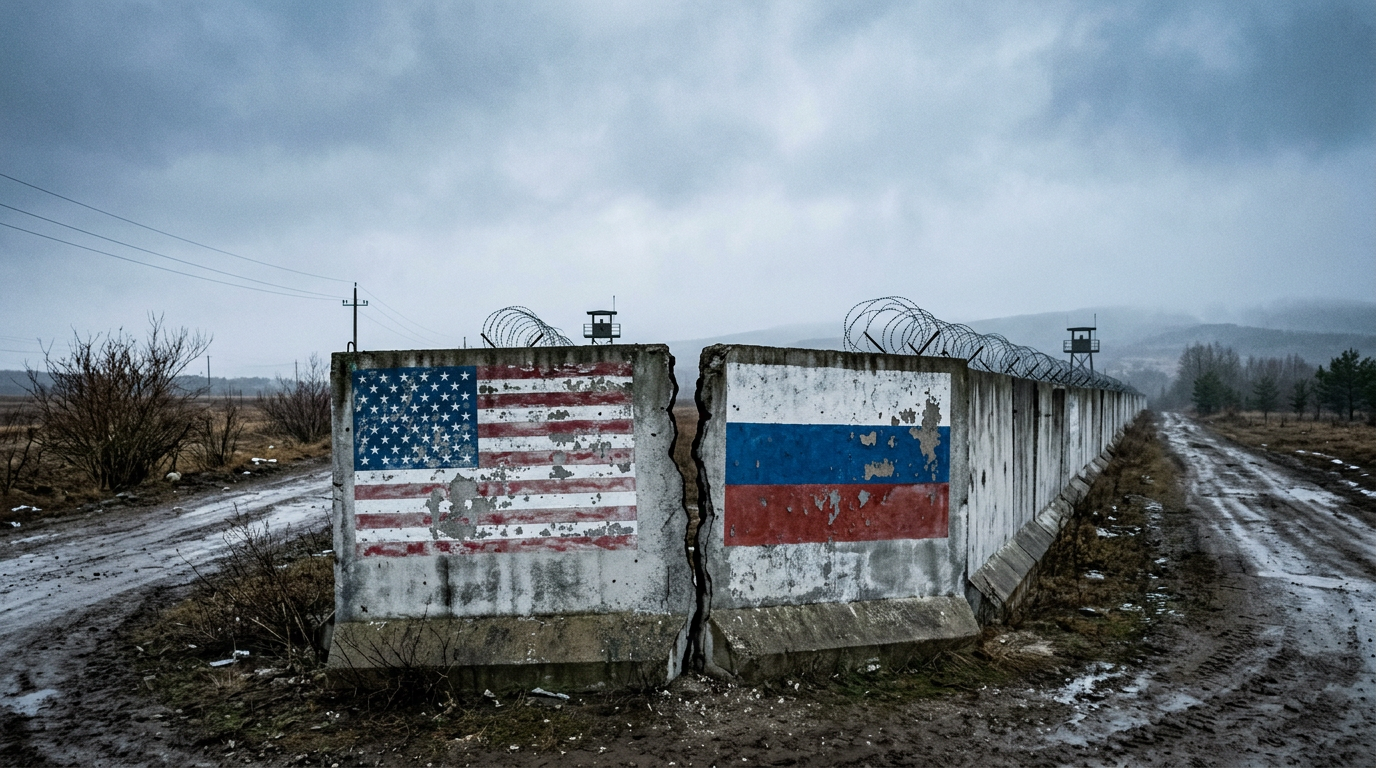
The Soviet collapse shows the terminal consequences of a sustained mismatch between strategic ambition and economic capacity. Gorbachev’s reforms were an attempt to close that gap, but they came too late and destabilized the political foundations the strategy depended on. The case also shows that grand strategy can’t be separated from internal political coherence: a strategy that requires suppressing the contradictions of the system it governs will eventually be undone by them. Resource constraints ignored long enough don’t stay strategic problems — they become existential ones. For a detailed account of how US-Russia relations evolved from the fall of the Soviet Union through the post-Cold War period, the structural factors behind that trajectory are worth examining alongside this case.
What the Cases Reveal About Strategic Decision-Making
Taken together, these cases surface several patterns that definitions alone can’t convey. They show grand strategy under pressure, where the gap between stated goals and available resources becomes visible in actual decisions rather than abstractions. The leadership framing is deliberate: the cases aren’t here to settle historical debates but to surface the decision logic that determined whether a strategy held or broke down.
Athens and Nazi Germany both collapsed under the weight of ambitions their means couldn’t support, but for different reasons — Athens through political enthusiasm, Germany through ideological rigidity. The Nixon-Kissinger opening shows the flip side: severe resource constraints can force a kind of strategic creativity that abundance rarely produces. The difference between the Marshall Plan and the Sicilian Expedition isn’t whether competing ideas were present in deliberation — they were in both cases — but whether resource reality was allowed to shape the outcome.
Strategies that stayed coherent over decades did so by keeping core objectives stable while allowing tactical adaptation. Containment survived multiple administrations because the goal was modest and clear enough to be resourced across changing political conditions. The Soviet strategy broke down because it required suppressing internal contradictions that compounded over time rather than resolving them. And Britain’s Suez failure wasn’t primarily a military or economic miscalculation — it was a failure to account for the political reality that American financial leverage had made British strategic autonomy conditional. Leaders who treat political constraints as secondary to capability assessments tend to discover them only when a strategy collapses.
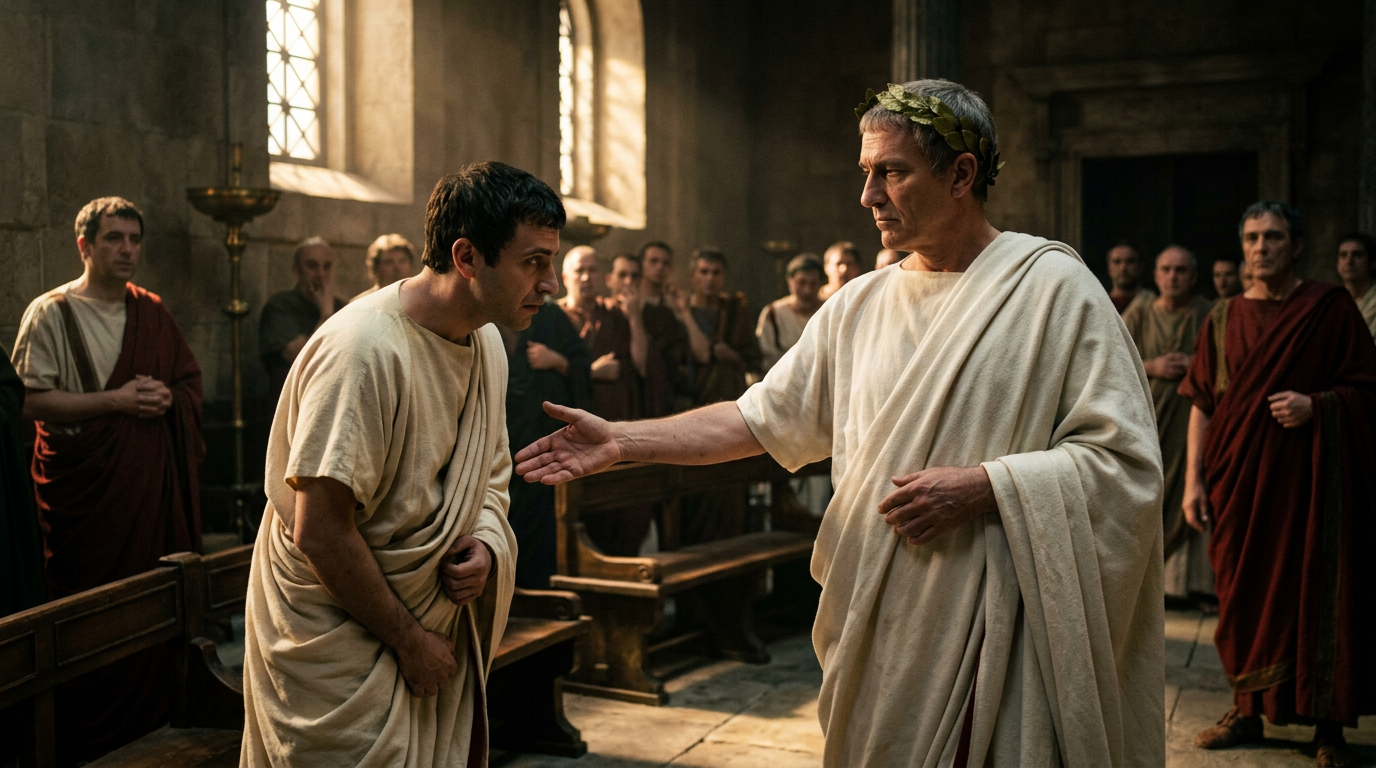
The deliberative dimension visible across Athens, the Nixon opening, and the containment debates shows that grand strategy is rarely the product of a single coherent vision. The tension between competing internal ideas isn’t a failure of the process; in several cases, it is the process. The same dynamic appears in how Julius Caesar’s political decisions created the men who ultimately killed him — a case where strategic logic and internal political management pulled in opposite directions until the contradiction became fatal.
American Grand Strategy and Cold War Precedents
American grand strategy has been shaped, across its most consequential periods, by the tension between global ambitions and the limits of domestic political will. The cases covered here — containment, the Marshall Plan, the China opening — each reflect a recurring pattern in US statecraft: the need to achieve outsized strategic effects through means that Congress and the public would support over time. What sets American grand strategy apart as a national context isn’t the scale of its objectives but the degree to which those objectives have had to be continuously reconciled with democratic accountability and fiscal constraint.
The Cold War cases form a self-contained set of lessons about what it takes to sustain a grand strategy across decades of ideological competition and resource pressure. Containment worked because it was calibrated to what the United States could actually sustain; the Soviet collapse shows what happens when that calibration is never made. The Cold War is the most extensively documented test case for whether grand strategy can hold under conditions of prolonged uncertainty, and the lessons it surfaces about coherence, resource discipline, and political durability apply well beyond the era itself.
Whether Grand Strategy Is a Teachable Discipline
Some analysts — Gaddis among them — treat grand strategy as a learnable framework, one that can be studied through historical cases and applied to new contexts. Others argue that what gets called grand strategy is largely constructed after the fact: a coherent narrative imposed on decisions that were, at the time, improvised, contested, and contingent. The cases here don’t cleanly support either position. Containment was deliberately theorized before it was put into practice; the Sicilian Expedition and the Soviet collapse look, in retrospect, like failures of strategic logic that participants couldn’t see clearly in real time. What the cases do show is that certain principles — matching ends to means, sustaining coherence under pressure — recur across contexts. Whether that makes grand strategy teachable or simply recognizable is a question this article leaves open, because the historical record does too.
Who This Analysis Is For
This treatment of grand strategy is most directly useful for four kinds of readers: a leader or decision-maker working to match organizational goals with constrained resources and competing internal priorities; a student or analyst studying US or American grand strategy as a historical and policy subject; a reader drawing on Cold War precedents to think through contemporary strategic challenges; and someone evaluating whether grand strategy is a coherent analytical framework or a retrospective narrative imposed on complex events. Readers interested in how contemporary great-power competition maps onto these historical patterns may also find it useful to examine how the US-China technology rivalry and Europe’s strategic role are reshaping the current competitive environment.
The Three Decisions That Determine Whether a Grand Strategy Holds
Across every case, the same fault lines appear: goals that outran available means, deliberation hijacked by enthusiasm, and political constraints treated as negotiable until they weren’t. The strategies that held were honest about all three before committing — not after. If you’re working through how these principles apply to a specific strategic context, going directly to the case studies is the most useful next step.