Israel in the Middle East: Military Power, Regional Alliances, and a Shifting Strategic Order
Israel holds a significant military advantage in the Middle East, but it’s also in the middle of one of the biggest strategic reassessments in its modern history. This page covers five areas: military deterrence, US command structure, the fallout from October 7, Iran’s threat approach, and regional power projection. Each section looks at what was true before October 7, 2023, and what has changed since. By the end, you’ll have a clearer picture of how Israel’s regional position has shifted and what that means for the broader Middle East.
How October 7 Broke Israel’s Deterrence Model and What Replaced It
Before October 7, Israel’s security approach relied heavily on intelligence dominance: the idea that threats could be monitored and stopped before they reached a critical scale. The Hamas attacks exposed a serious gap between that model and reality. A mass infiltration slipped through. That wasn’t just a one-time failure; it revealed a structural problem with using intelligence-based deterrence against non-state actors who can operate below the level that military monitoring typically catches.
What replaced it is a more forward-leaning approach focused on actively degrading what adversaries can do militarily. Israel now treats the operational capability of proxy forces as an immediate military problem, not something to manage through intelligence over time. That shift explains the pace and scope of Israeli military action since October 2023, including strikes on Hezbollah leadership, Iranian assets, and targets in Yemen. This is a lasting change in how Israel approaches deterrence against non-state actors, not a temporary escalation.
CENTCOM Integration and the Structural Depth of the US Alliance
Israel’s 2021 transfer into US Central Command’s area of responsibility did something bilateral diplomacy alone couldn’t: it plugged Israel directly into the same command structure that links US military partners across the Gulf. Before that, Israel sat under EUCOM, outside the regional command structure governing US operations in the Middle East. The CENTCOM transfer changed that. It enabled direct interoperability, shared intelligence, and coordinated regional responses that a bilateral relationship simply doesn’t provide.
That distinction matters when you’re assessing Israel’s full alliance picture. The US relationship provides operational depth and structural security guarantees. The Abraham Accords normalization framework with Gulf states is significant, but it works on a different and more conditional logic. Those partnerships made real progress before October 7 but have been under diplomatic strain since, with Gulf governments managing pressure from their own populations and the Arab League by pulling back publicly, even as security cooperation has continued at the operational level. To understand how one Gulf state in particular has navigated this balance, read about how the UAE became a regional power through oil wealth and strategic foreign policy. The Accords haven’t collapsed, but they remain politically conditional and operationally limited compared to what CENTCOM membership provides.
Iran’s Two-Track Threat: Direct Escalation and the Proxy Network
To understand Iran as a threat to Israel, you need to hold two separate dynamics in mind, because they work on different deterrence logics and call for different responses.
Iran’s direct military threat became concrete in April 2024, when it launched ballistic missiles and drones at Israeli territory, the first state-on-state strike of its kind in this decades-long conflict. That crossed a structural threshold. It’s governed by the logic of deterrence between sovereign military forces, where signaling, escalation ladders, and the credibility of retaliation are what matter.
The proxy network is a different problem. Spread across Lebanon, Iraq, Syria, and Yemen, Iran’s proxy structure is built to impose sustained costs through attrition and geographic spread rather than a single decisive blow. It’s harder to deter through conventional military signaling, partly because no single actor controls the whole network, and partly because the costs are designed to build gradually rather than arrive all at once. Israeli strikes in 2024 hit Hezbollah hard, including the elimination of senior leadership, which meaningfully reduced the threat on Israel’s northern front. But degrading Hezbollah hasn’t dismantled the broader network. Iran’s proxy forces in Iraq, Syria, and Yemen are still operational.
Israel’s Alliance Architecture: CENTCOM Depth and Abraham Accords Contingency
Israel’s alliance relationships have two distinct layers, and it’s worth keeping them separate. The US relationship, anchored by CENTCOM membership, provides structural guarantees: shared intelligence, interoperability, and access to a regional alliance network that stretches across the Gulf. That’s categorically different from what bilateral diplomacy produces.
The Abraham Accords created a second layer of regional partnerships with Gulf states. Those relationships advanced a realignment of security interests between Israel and Arab governments that share concerns about Iranian power. The Gaza conflict has complicated normalization momentum and pushed Gulf governments to be more careful about how publicly they engage with Israeli security cooperation. But the underlying security logic that drove the Accords hasn’t reversed. Operational coordination has continued beneath a more cautious diplomatic surface.
Israel’s Power Projection from the Mediterranean to the Gulf
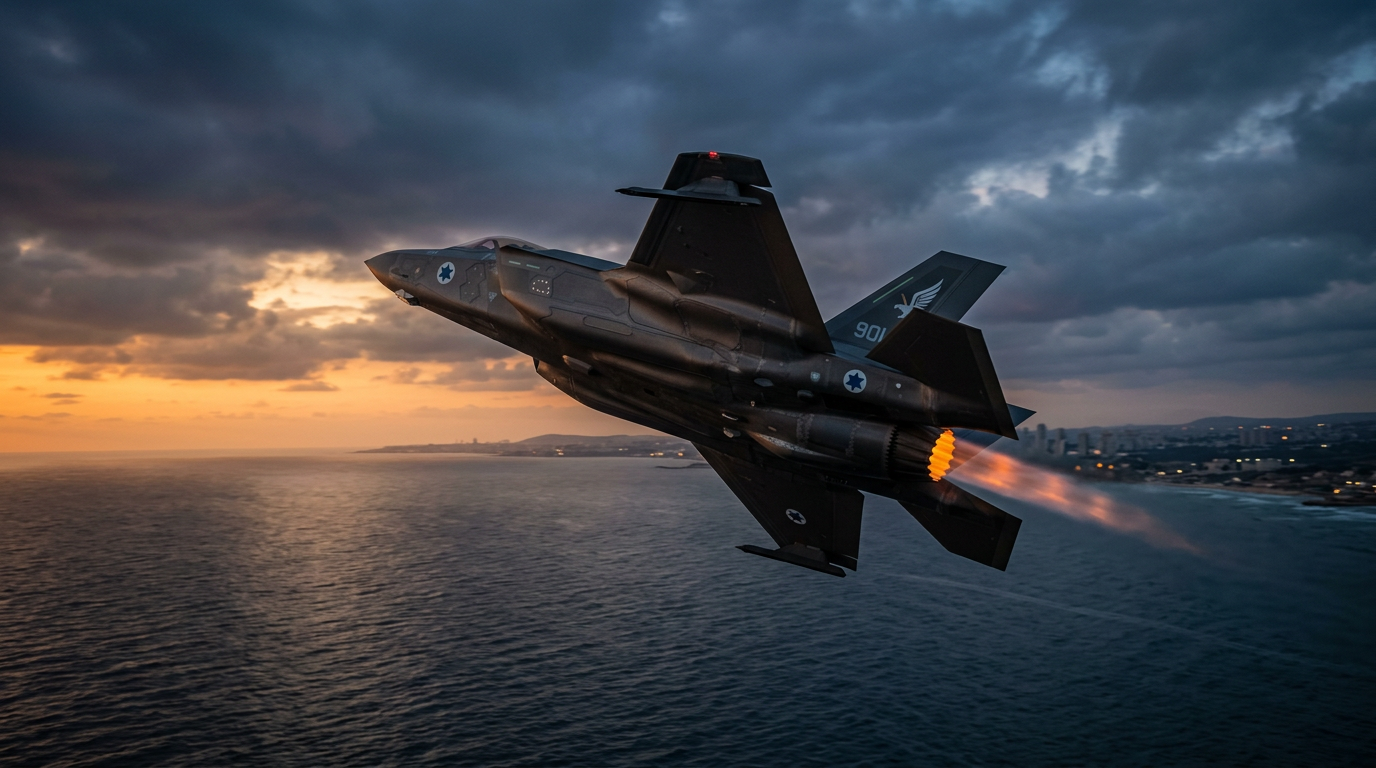
The geographic reach of Israeli military action since October 2023 has extended well beyond its immediate borders. Israel has shown it can conduct strikes in Iran, Yemen, and across the Levant within compressed timeframes, extending its effective military reach from the eastern Mediterranean through the Red Sea corridor to the Gulf. That reach, combined with the degradation of Hezbollah as a frontline deterrent force and the exposure of Iran’s ability to strike Israeli territory directly, has changed the regional deterrence picture in ways that affect every state calculating its security position, not only Israel. For a broader look at the military, technological, and diplomatic foundations behind this capability, see this full breakdown of why Israel is so powerful.
Israel’s strategic options aren’t determined unilaterally. They’re shaped by where Arab states stand, how much pressure Iran applies, and how actively the US engages. But the relationship runs both ways: Israeli military action has demonstrably reshaped those variables, and the regional environment that results in turn constrains or expands Israel’s next moves. That back-and-forth is the right frame for understanding how the regional order keeps shifting.
Assessing Israel’s Strategic Position After October 7
Three factors most directly shape Israel’s current position. First, the shift from intelligence-based deterrence to forward military degradation. Second, the structural depth that CENTCOM membership provides compared to the more conditional Abraham Accords partnerships. Third, the difference between Iran’s direct state-on-state escalation and its proxy attrition network, each of which requires a different analytical and policy response. Analysts working in this space should apply those distinctions consistently rather than treating Iran’s threat or Israel’s alliances as a single thing. The post-October 7 environment has changed specific variables. The underlying structural conditions that predate the attacks are still the necessary baseline for any accurate assessment. Those looking to place this within a longer historical frame will find it useful to explore how grand strategy works in practice — aligning long-term goals with limited resources under real constraints.
Frequently Asked Questions
How has October 7, 2023 changed Israel’s strategic calculus in the Middle East?
October 7 forced a fundamental shift away from intelligence-based deterrence as the primary security model, toward active military degradation of adversary capacity, particularly against non-state actors. Israel’s threat assessment now treats the operational capability of proxy forces as an immediate military problem rather than a manageable intelligence challenge.
What is Israel’s relationship with US regional military command structures, and why does it matter?
Israel’s 2021 transfer into US CENTCOM’s area of responsibility means Israeli military planning now operates within the same command structure as US partners across the Gulf, enabling direct interoperability and coordinated regional responses that weren’t available under the prior EUCOM alignment. This gives Israel access to a regional alliance network, not just a bilateral US relationship.
How does Iran’s direct military threat to Israel differ from its proxy network threat?
Iran’s direct threat, demonstrated by the April 2024 ballistic missile and drone strikes, is a state-on-state escalation dynamic governed by deterrence logic between sovereign military forces. The proxy network threat works through distributed actors across Lebanon, Iraq, Syria, and Yemen, designed to impose sustained costs through attrition rather than decisive engagement, and is harder to deter through conventional military signaling.
What does Israel’s regional power projection look like beyond its immediate borders?
Israel’s strikes across Iran, Yemen, and the Levant reveal something significant: this is no longer just local deterrence. The ability to shape security conditions from the eastern Mediterranean to the Red Sea marks a genuine shift in regional military dynamics, one worth tracking closely. If you’re following how these developments unfold, exploring dedicated regional security analysis will keep you ahead of the curve.