Left Populism in Europe: Parties, Patterns, and the Rise and Fall of the Populist Left
Left populism in Europe is a political current that gained serious ground after the 2008 financial crisis, then faded in most countries over the following decade. This page covers the main parties, electoral patterns, and the reasons behind both the rise and retreat of the populist left across Europe. It also clears up the difference between “radical left” and “populist left,” since that distinction shapes how parties and movements get categorized and analyzed. By the end, you’ll have a solid basis for understanding how left populist parties have performed and why their paths have looked so different from country to country.
Left Populist Parties Across Europe: From Syriza to Enhedslisten
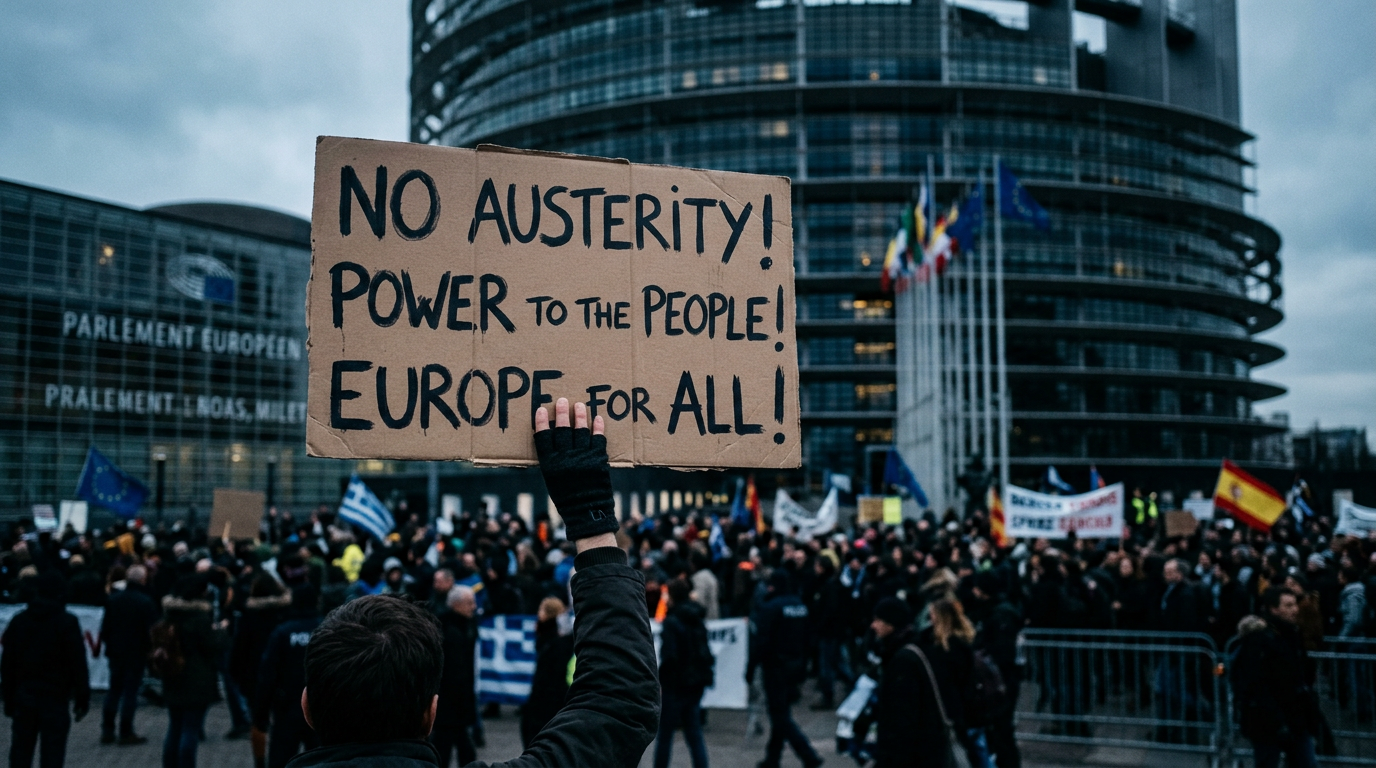
The parties that best illustrate this phenomenon span a wide geographic and strategic range. Syriza went from a minor coalition of radical left factions to winning the 2015 Greek general election on an anti-austerity platform, pulling in roughly 36% of the vote. When it accepted EU bailout conditions, that marked the start of a long electoral slide. In Spain, Podemos emerged in 2014 from the Indignados protest movement, peaked at around 21% in the 2016 general election, and later joined government as a junior coalition partner. That move blurred its outsider identity and wore down its populist appeal.
La France Insoumise, founded by Jean-Luc Mélenchon, secured nearly 22% in the first round of the 2022 French presidential election and became the leading left opposition force in the National Assembly under the NUPES alliance. Mélenchon also anchored the broader NUPES/NFP coalition, showing how left populist parties in Western Europe have pursued coalition-building to compensate for fragmented left electorates. In Germany, Die Linke, a successor to the East German communist party, held a consistent parliamentary presence from 2007 onward before falling below the 5% threshold in 2021, the result of internal fragmentation and the rise of competing left alternatives.
Portugal’s Bloco de Esquerda grew significantly during the post-2008 austerity period, reaching over 10% in 2015 and supporting a minority Socialist government from outside the coalition. Sinn Féin in Ireland, historically tied to republicanism, repositioned itself around economic inequality and housing, and became the largest party by vote share in the 2020 general election at roughly 24.5%. Denmark’s Red-Green Alliance (Enhedslisten) is a different model entirely: a Northern European party that has kept steady parliamentary representation, consistently polling between 6% and 9%, without the high-intensity populist rhetoric common among its Southern European counterparts.
The Communist Party of Greece (KKE) is its own case. It explicitly rejected the populist framing Syriza adopted, held to a traditional Marxist-Leninist identity, and maintained a stable but limited electoral base of roughly 5–7%.
Why the North–South Geographic Divide Is Not Incidental
Looking at these parties across countries and time reveals structural patterns that single-country studies can’t isolate. The contrast between Syriza’s collapse after governing and Enhedslisten’s stable, low-intensity presence only becomes meaningful when you compare them directly.
The geographic split between Southern and Northern Europe tracks closely with differences in austerity exposure, electoral volatility, and strategic orientation. Syriza, Podemos, and Bloco de Esquerda all reached double-digit or plurality results in countries hit hardest by post-2008 austerity. To understand the financial mechanisms that made austerity so politically explosive, it helps to examine how pessimistic economists analyzed financial instability and capitalist crises in the years surrounding the crash. Northern European parties like Enhedslisten operate in more stable political economies and haven’t come close to comparable vote shares. A single-moment snapshot would flatten these distinctions entirely.
How Governing Status, Strategic Identity, and Organizational Origin Shape Left Populist Trajectories
A few factors consistently set parties in this category apart from one another. The choice between a populist “people versus elite” strategy and a traditional radical left identity produces measurably different electoral outcomes. Syriza and Podemos explicitly built that populist frame to broaden their appeal beyond the organized left. The KKE rejected it entirely and held a narrow but stable base. Entering government has consistently eroded populist appeal: Syriza’s acceptance of EU bailout terms and Podemos’s role as junior coalition partner both produced significant vote loss, while parties that stayed outside government, like Bloco de Esquerda and Enhedslisten, didn’t face the same identity erosion.
Organizational origin also shapes a party’s populist character in ways that stick even when policy platforms overlap. Podemos came directly out of a protest movement. Die Linke descended from a state communist party. That difference produced distinct rhetorical registers and organizational cultures, and different relationships to the populist left label.
Populism as Strategy, Ideology, or Decline
These distinctions point toward three recognizable patterns. For Podemos and Syriza, populism was most accurately a strategic choice made in response to post-crisis conditions. Both adopted the rhetoric of “the people” against entrenched elites as a way to pull in voters beyond the traditional organized left. That strategic framing helps explain why their populist identity proved fragile once they entered government.
La France Insoumise is a different case, where left populism functions as a deliberate ideological construction rather than a tactical overlay. Mélenchon’s project explicitly theorized the opposition between “the people” and economic and political elites as the central axis of political conflict, embedding anti-austerity and anti-neoliberal commitments into a programmatic identity. Populism here isn’t a rhetorical instrument; it’s the organizing logic of the political project itself. The broader question of how political actors align long-term goals with available resources under real constraints is one that grand strategy frameworks illuminate across very different historical contexts.
A third pattern is decline. Syriza, Podemos, and Die Linke each followed the same arc: rapid growth during or after the 2008 crisis, an electoral peak, and then a loss of ground. The conditions that enabled left populist growth, including economic crisis, institutional distrust, and outsider positioning, don’t sustain electoral performance once those conditions shift or once parties become institutional actors themselves.
What This Analysis Is Useful For
This comparative framework applies directly to several lines of inquiry: comparing left and right populism in Europe and identifying what separates them ideologically and rhetorically; studying radical left party performance across multiple countries and electoral cycles; tracing the full electoral trajectory of specific left populist movements from emergence through decline; and analyzing how post-2008 austerity conditions shaped the rise and subsequent weakening of left populist parties. The post-2008 period also reshaped European monetary policy in ways that intersected directly with left populist platforms — understanding how negative interest rates and unconventional monetary tools worked during this era adds important context to why anti-austerity arguments gained such traction.
The Governing Trap and the Limits of Crisis Politics for Europe’s Populist Left
Left populist strength in Europe was never really about ideology. It was about conditions. Austerity, institutional collapse, and outsider status created the opening; governing responsibility closed it. The North–South vote share gap reflects that directly. The parties that stayed out of power kept their identity, while those that took power lost both. If you’re mapping these movements further, digging into comparative electoral data by country is the clearest next step.