Napoleon’s Leadership: The Mind, Strategy, and Psychology Behind His Military Genius
Napoleon’s leadership shaped the outcomes of his campaigns more than any single battle plan or political decision. This page looks at the cognitive traits, psychological patterns, and command habits that defined how he led, and how those qualities changed over time. You’ll get a clear look at both the strengths that drove his early dominance and the factors that led to his later failures. By the end, you’ll have a solid basis for judging what made his leadership work, where it broke down, and why.
Cognitive Strengths That Defined His Command
Napoleon processed battlefield information faster than most commanders of his era. That speed compressed his decision cycle and forced opponents to react instead of act. But it wasn’t reflexive. It was grounded in a deliberate analytical process that made his rapid decisions reliable rather than reckless.
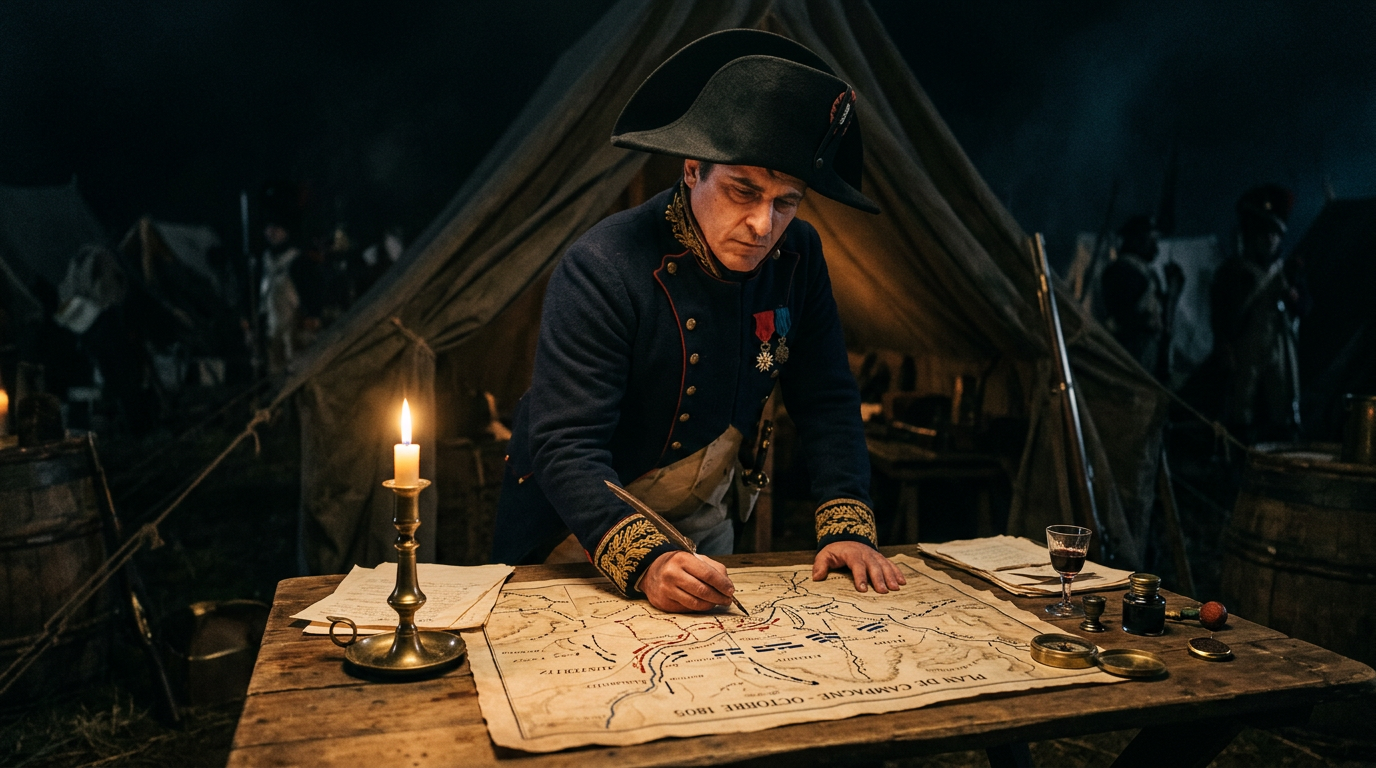
His mental foresight extended that advantage into campaign planning. He consistently modeled how opponents would behave before a battle, building operations around predicted enemy responses rather than reacting to them. Austerlitz is the clearest example: his pre-positioning of forces reflected not just tactical calculation but a precise read of how the allied commanders would respond to a perceived opportunity. That same psychological insight shaped his use of deception and feints at the operational level. He read enemy commanders as psychological actors, identifying hesitation, pride, and predictability as things to exploit.
Two more traits kept this command system working under pressure. Mental discipline, the ability to stay analytically clear when other commanders defaulted to caution or panic, kept his decision-making coherent across long and complex operations. Strategic patience was the visible result of that clarity: the observable choice, especially in early campaigns, to hold off on decisive engagement until conditions were in his favor. This kind of long-term alignment of goals with available resources is central to how grand strategy works in practice, and Napoleon’s early campaigns illustrate it as well as any historical case.
How the Same Traits Became Liabilities
The cognitive strengths that drove Napoleon’s early effectiveness worked best under conditions of uncertainty and fluid engagement. As his record of success grew, those same traits started operating in a distorted environment, one shaped by overconfidence, resistance to counsel, and eventually mental fatigue.
Overconfidence was the most damaging shift. Napoleon increasingly discounted risk and underestimated adversaries, a psychological change that corrupted the strategic assessment his earlier decisions had depended on. The 1812 Russian campaign is the most visible case: the same foresight and opponent-modeling that had produced Austerlitz was applied to a strategic situation he had fundamentally misread in scale and nature.
Rapid decision-making and impulsive tendencies aren’t opposites. They exist on a continuum. What separated them in Napoleon’s command was whether the deliberate analytical process was present or not. That process had originally made his speed an asset. Under sustained pressure or unexpected reversal, it broke down, and decisions that looked like speed were actually bypassing the analysis that had made speed effective.
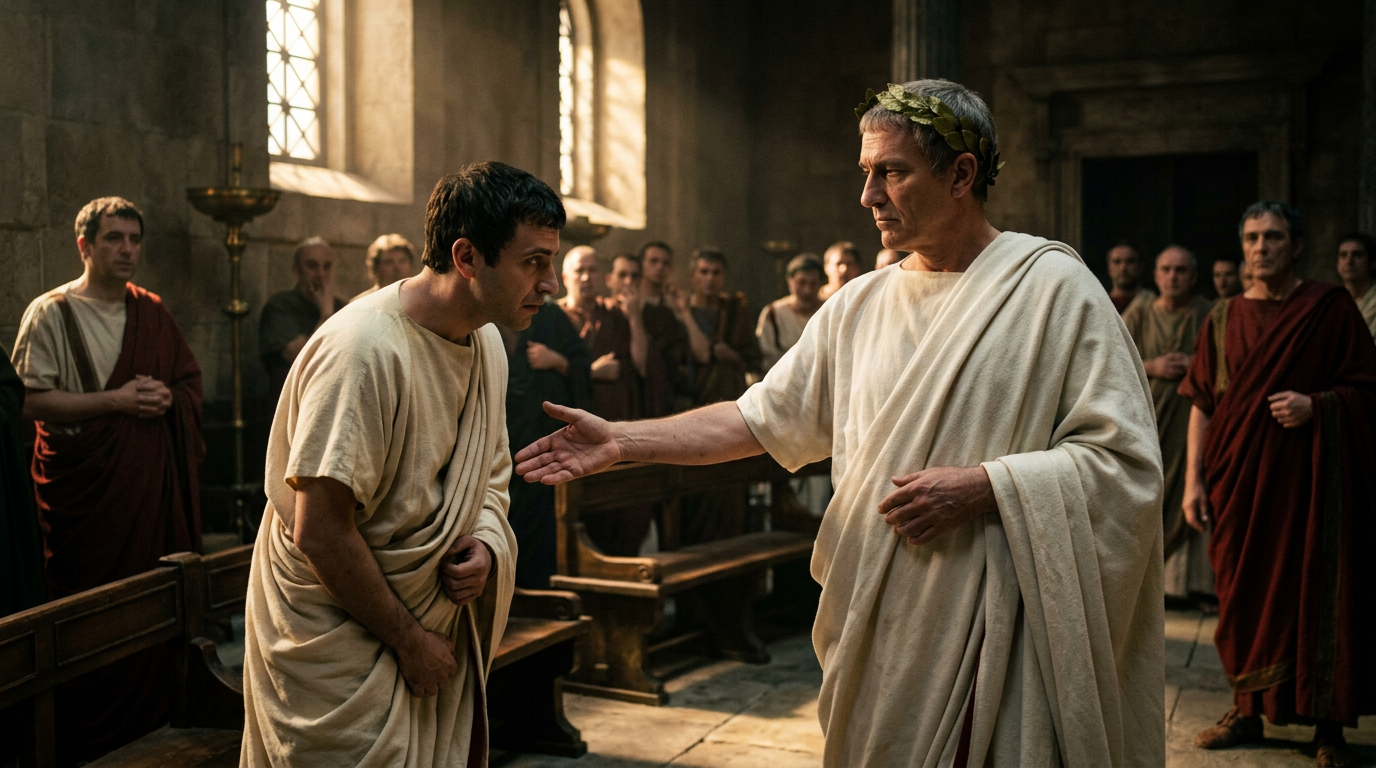
His psychological need for dominance made things worse. Resistance to dissenting strategic advice narrowed the information he was working with, reducing the quality of late-campaign decisions at exactly the moments when broader input mattered most. Evidence from later campaigns also suggests his mental sharpness, the speed and precision that had defined his command, deteriorated under the cumulative strain of prolonged warfare, affecting both tactical and strategic judgment. This pattern of personal psychology undermining political power has a close parallel in how Julius Caesar’s character traits shaped the decisions that ultimately led to his assassination.
Distinguishing Strategy, Personality, and Tactics as Analytical Lenses
How you analyze Napoleon’s leadership depends on which level of examination the question calls for. A strategy-focused lens treats his decision-making as an integrated system, looking at how foresight, opponent modeling, and operational planning combined to produce consistent battlefield outcomes, with the focus on strategic results rather than internal psychological states. A personality-focused lens, which overlaps most directly with the analysis here, puts more weight on ego, emotional volatility, and psychological resilience as character-level variables. A tactics-focused lens narrows further, examining how psychological traits translated into specific observable behaviors: speed of maneuver, deception operations, and the exploitation of opponent hesitation.
The question of whether Napoleon was a good leader cuts across all three. It requires weighing cognitive strengths against psychological limitations and strategic successes against failures. The evidence on both sides is substantial enough that the answer depends on how much weight you give to each.
Applying This Analysis Across Different Questions
This dual-lens framework, examining cognitive strengths and psychological vulnerabilities together rather than separately, is useful across several distinct lines of inquiry: analytical study of how Napoleon’s cognitive traits shaped campaign outcomes; psychological or personality-focused examination of his command behavior; evaluation of his military tactics as behavioral expressions of his psychological profile; and assessment of his overall effectiveness as a leader, which requires a balanced account of both successes and failures.
The value of treating strengths and vulnerabilities within a single frame is that it prevents a common mistake: attributing his later failures to external bad luck. Overconfidence, resistance to counsel, and cognitive fatigue aren’t incidental biographical details. They are structural explanations for specific strategic deterioration, traceable to the same psychological variables that produced his earlier effectiveness. For a broader look at how historians evaluate these variables across different command contexts, Napoleon’s leadership psychology and military strategy offers a deeper examination of the same framework.
Evaluating Napoleon’s Cognitive Strengths and Psychological Vulnerabilities Together
Napoleon’s strengths and vulnerabilities were the same traits operating under different conditions. Rapid decision-making was an asset when grounded in analysis, and a liability when that grounding eroded. Strategic patience deteriorated more visibly than mental discipline, which is why his behavioral outputs became unreliable before his internal capacity failed. If that distinction interests you, exploring historical leadership analysis further is a natural next step.