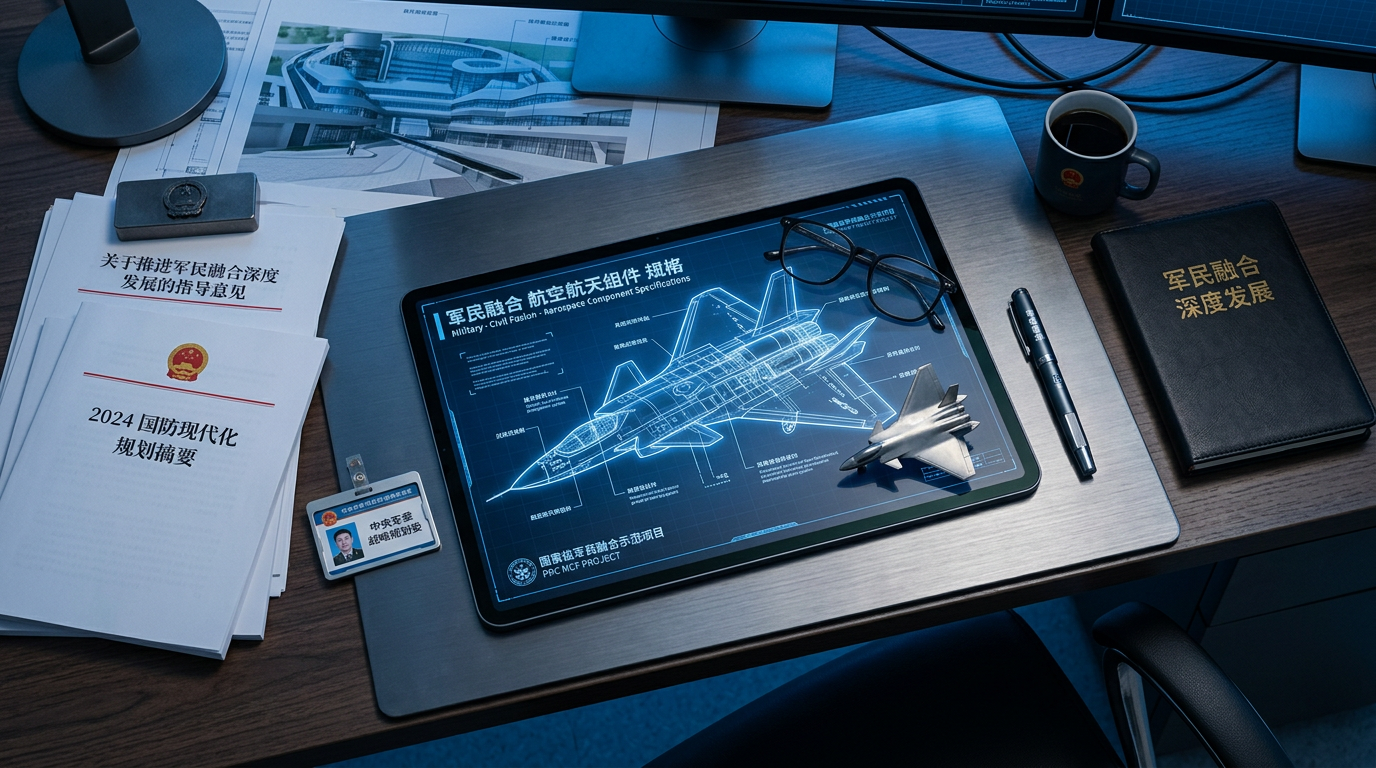
Military-civil fusion is China’s national strategy for connecting its civilian and defense economies to build the People’s Liberation Army into a world-class military by 2049. This page explains how the strategy works, who it involves, and why it matters for understanding China’s approach to military modernization. It covers the main mechanisms, institutions, and sectors affected, drawing on available policy and research. By the end, you’ll have a clearer basis for assessing how military-civil fusion shapes China’s technological and defense development.
What MCF Actually Does and Who It Covers
MCF works by creating required links among three groups: the PLA, state-owned defense enterprises, and the civilian technology sector. Civilian firms are required to make their technologies, infrastructure, and talent available for military use. Legal and regulatory mechanisms break down the separation between defense and commercial R&D, procurement, and intellectual property, making dual-use technology transfer a built-in feature of the strategy rather than an exception.
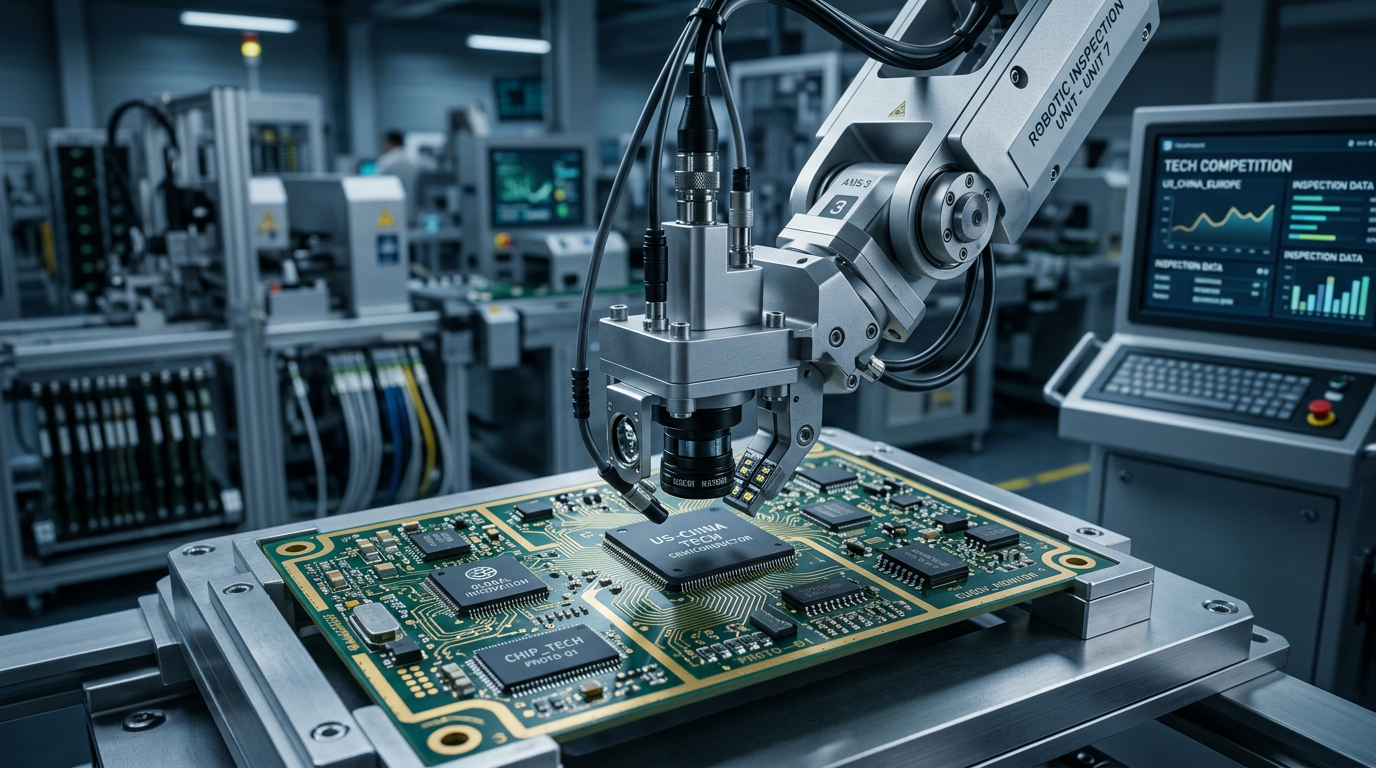
The strategy explicitly targets China’s commercial technology sector, including AI, semiconductors, aerospace, and biotechnology, as sources of dual-use capability that can be transferred into PLA systems and platforms. MCF also reaches beyond state-owned defense contractors to privately held Chinese technology companies, creating compliance obligations and technology-sharing expectations across the broader private sector. For a broader view of how this competition plays out across key technology sectors, see this analysis of US-China technology competition and Europe’s strategic role. This reach into private firms is one of MCF’s defining features. State-owned enterprises are already embedded in the defense-industrial base and subject to direct state control. Private firms are brought in through legal obligations and regulatory pressure, which makes their compliance harder to verify and their exposure harder to assess from the outside.
How Xi Jinping’s 2017 Restructuring Changed MCF’s Scope and Enforcement
Understanding MCF’s current form requires knowing what changed in 2017. Civil-military coordination had existed as a policy direction in China since the 1990s, but without centralized enforcement authority it stayed a strategic aspiration rather than a mandate. When Xi Jinping established the Central Military-Civil Fusion Development Commission in 2017, he turned that aspiration into a top-down directive with real enforcement power. He placed the strategy under direct top-level leadership and extended its reach across both government and industry, including private commercial firms and civilian innovation ecosystems that earlier policy had not covered.
The institutional and technological dimensions of MCF are distinct but inseparable. The institutional framework, the Commission, the PLA, and the state-owned enterprises, creates the obligation to share. The technological focus, AI, semiconductors, and dual-use commercial innovation, determines what is being transferred and why it matters for PLA capability development. Neither layer makes sense without the other. China’s push to dominate connected device infrastructure follows the same logic — its IoT strategy and state-directed market expansion reflect the same policy-driven approach to building dual-use technological capacity.
MCF Terminology and Related Framings
Some policy and academic sources use “military-civilian fusion” rather than “military-civil fusion.” Both terms refer to the same CCP strategy, and “MCF” is the standard acronym used across US government, think-tank, and policy literature regardless of which full-form phrasing a source uses.
“Chinese CMI” (civil-military integration) appears in policy literature as a related framing and is sometimes used interchangeably with MCF. More precisely, civil-military integration describes the broader strategic direction China has pursued since the 1990s. MCF is the current, more centrally enforced version of that same underlying objective.
Readers coming to this topic from a defense or military studies background may expect MCF to function as operational or battlefield doctrine. It doesn’t. MCF is a national economic and industrial strategy. Its endpoint is military modernization, but its mechanisms are institutional, legal, and technological. It shapes what capabilities the PLA can develop, not how the PLA uses them. Understanding how states align long-term goals with available resources is central to this kind of analysis — the literature on grand strategy and matching ends to means provides useful analytical grounding for assessing MCF as a strategic framework.
Who Needs to Understand MCF
MCF matters across several professional contexts. Policy analysts and government officials need it to assess the national security implications of China’s defense-industrial ties and dual-use technology transfer. Researchers and academics studying Chinese military doctrine, civil-military coordination, or PLA modernization engage with it as a field of inquiry. Business and technology professionals need it to assess supply chain exposure, investment risk, or compliance obligations linked to MCF-connected entities. Journalists and policy communicators covering China’s military modernization and its 2049 strategic goals run into it as a recurring reference point.
The right analytical lens is the same for all of these audiences: MCF is a national economic and industrial strategy with a military endpoint, not simply a defense policy or procurement framework.
Assessing MCF’s Reach Into China’s 2049 Military Modernization Goals
MCF’s real complexity comes from how three elements interact: the 2049 endpoint, the post-2017 enforcement authority, and the extension to private firms. Together, they turn what looks like procurement policy into a structural obligation across China’s entire innovation economy, one that reaches well beyond state-owned enterprises. If you’re assessing exposure, exploring our MCF entity analysis resources is a practical next step.