North Korea Nuclear Risk: Weapons Stockpile, Delivery Capabilities, and Strategic Threat
North Korea’s nuclear program is one of the most closely watched security concerns in the world right now. The country has an estimated 50 to 60 nuclear warheads and ballistic missiles that can hit targets across the region and potentially much farther. This page covers the weapons stockpile, delivery systems, and what the program actually means strategically, including why continued development matters even after the 2018 testing moratorium. By the end, you’ll have a clear picture of where the program stands and how analysts think about the real level of risk it presents.
Stockpile, Delivery Systems, and Strategic Doctrine
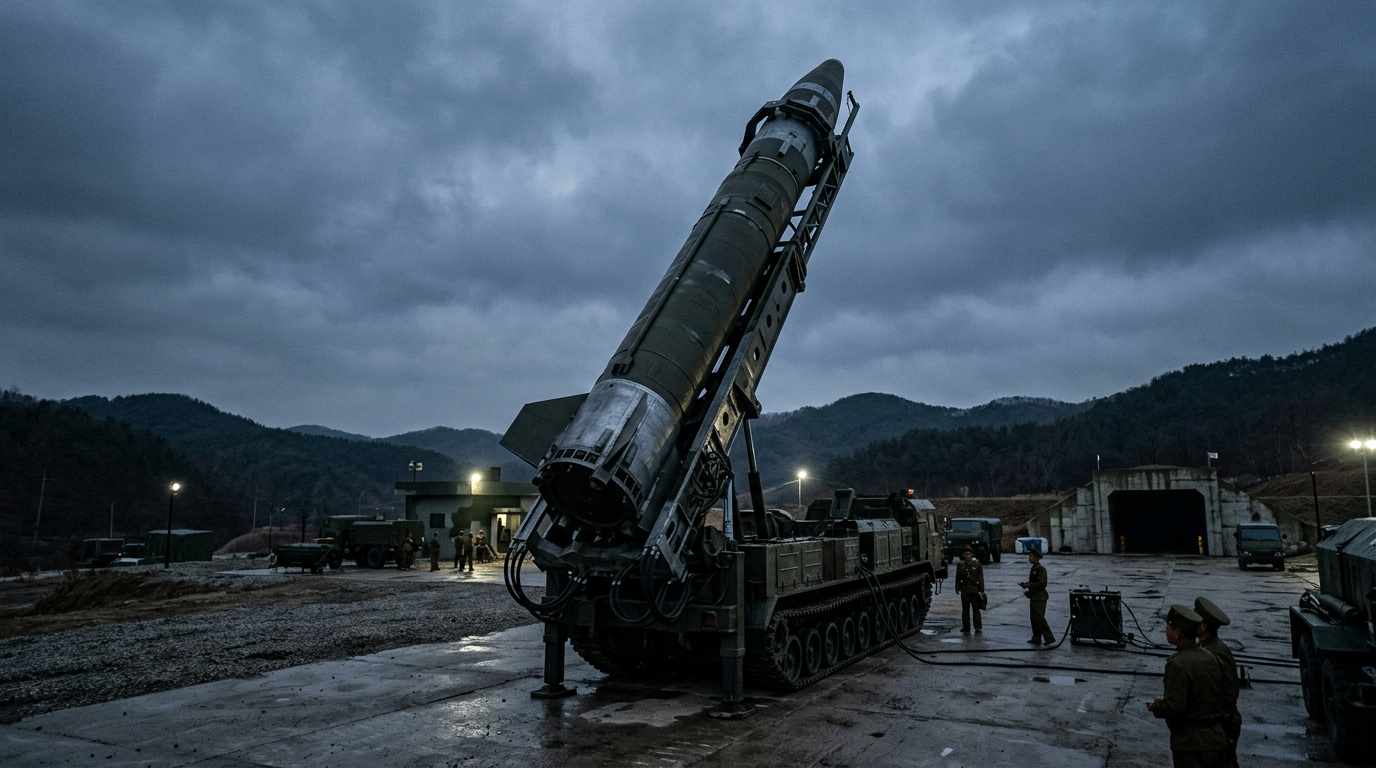
North Korea’s nuclear arsenal sits at roughly 50 to 60 warheads, and its fissile material production capacity means that number could keep growing. The warheads don’t exist in isolation: North Korea has ballistic missiles that can reach South Korea, Japan, and other neighboring countries, with longer-range systems extending the potential threat well beyond the immediate region. The warhead count alone doesn’t tell the full story. What matters is the combination of warheads and the delivery systems that can carry them.
On doctrine, North Korea has spelled out conditions under which it would consider using nuclear weapons, framing its arsenal as both a deterrent and something it might use first. That’s a meaningful departure from how established nuclear powers approach deterrence. North Korea has said nuclear use could be on the table in response to serious conventional military threats to the regime. That’s a broader and more ambiguous threshold than most deterrence models account for, and it creates real stability risks. For the US, South Korea, and neighboring states, this changes how they think about escalation in ways that go beyond Cold War-era deterrence thinking. For a broader look at how nuclear weapons are governed under international law and arms control frameworks, the legal and geopolitical context helps clarify what makes North Korea’s posture so distinct.
How the Program Developed: NPT Withdrawal Through the 2018 Moratorium
The current stockpile and delivery posture are the result of a program that has been advancing for decades. North Korea withdrew from the Nuclear Non-Proliferation Treaty in 2003, conducted its first nuclear test in 2006, and ran a series of additional tests after that. In 2018, it announced a testing moratorium, which was a declared pause in nuclear testing, not an end to the program.
That distinction matters. The moratorium didn’t stop weapons development, fissile material production, or ballistic missile work. All of that continued after 2018. If you treat the moratorium as a freeze on the overall program, you end up with a seriously inaccurate read on the current threat level. The gap between what North Korea has declared and what it has kept developing isn’t obvious from public statements alone.
Regional vs. Intercontinental Threat, and What Each Means for Defense Planning
North Korea’s delivery systems create two distinct risk profiles, and they carry different implications for different countries. Systems that can reach South Korea and Japan represent an immediate regional threat, one that directly shapes US-ROK defense posture and alliance planning. Longer-range ballistic capability extends potential reach well beyond the peninsula, which means more countries have to factor North Korean capability into their own defense planning. These are not the same risk, and they don’t call for the same responses. Understanding how grand strategy works when aligning long-term goals with limited resources under real constraints helps explain why different states respond so differently to the same threat profile.
North Korea’s Nuclear Program Within the Global Nonproliferation Framework
North Korea’s program isn’t just a regional security problem. Its continued development affects the credibility of international nonproliferation frameworks, including the NPT, which are designed to apply to everyone. North Korea’s trajectory sets precedents and creates pressures that other states and international institutions have to respond to. Accurate risk assessment means looking at the program within that broader context, not treating it as a standalone case. The US-China dimension adds another layer of complexity — the technology competition between the US, China, and Europe shapes the strategic environment in which North Korea’s program continues to develop.
Assessing North Korea’s Nuclear Threat: What the Stockpile, Doctrine, and Moratorium Actually Tell You
The 2018 moratorium froze testing, not capability. Fissile material production, missile development, and warhead miniaturization all kept moving forward. Pair that with a nuclear threshold broad enough to cover conventional threats to the regime, and the risk picture looks meaningfully different than headline warhead counts suggest. If you’re tracking how this shapes US and allied deterrence strategy, the policy response section is worth your time.